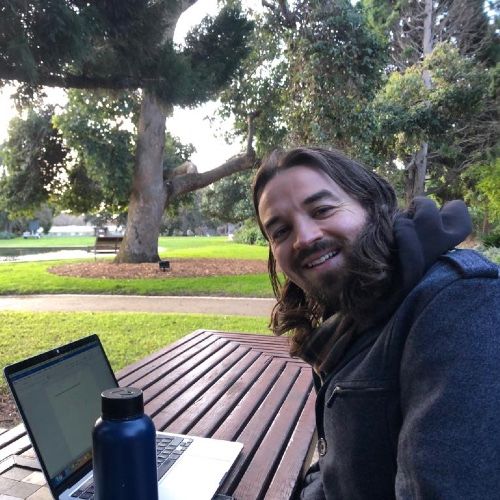
Crafting New Pathways for Young Men Through Poetry - Sam Browne
Can poetry change the way people see the world? Can it help men to deal with and open up about their own vulnerabilities – and help to shift ideas about manhood? We talk to 21-year-old spoken word poet Sam Browne about how it has had exactly these impacts on him, and how he is now using poetry to express his deepest feelings and struggles – and to push back against anti-feminist forces such as the manosphere. In the process, Sam’s art highlights alternative ways of being for young men centred on love, care, and connection – whilst giving voice to the pain of trying to fit into a patriarchal society in which issues such as mental health continue to be bottled up.
Sam reads out four of his moving poems, and we discuss the ideas behind them and how they connect to contemporary pressures of masculinity. Sam shares his own journey into poetry via comedy, from being an active participant in ‘lad culture’ to finding himself through the arts, and learning about then starting to speak out about gender-based violence thanks to the women around him. He articulates the liberation of ridding oneself of the shackles of gender norms, finding what we are passionate about, and not being afraid to show that we care – and the power of the arts to help us do that.
Sam is from Southend, Essex in the UK, and his performances have developed an online following of 100,000+ and tens of millions of views. He has won awards for his activism as well as numerous poetry slams, and recently featured in the BBC documentary ‘Eastenders Investigates: The Manosphere’. He now performs at conferences, summits, in schools and at some of the biggest poetry nights in the world.
- Sam’s website (including tour info)
- TikTok
Timeline:
- Intro (00:00-02:40)
- Poem: Hinge and Harry Kane (02:40-04:33)
- Navigating contemporary dating pressures (04:33-09:29)
- Sam’s journey into poetry (09:29-15:04)
- The relationship between poetry and masculinity (15:04-20:49)
- Unravelling internalised misogyny (20:49-29:22)
- Poem: Like a Man (29:22-30:39)
- The intergenerational transmission of manhood (30:39-36:31)
- The ‘therapeutic self-destruction’ men engage in (36:31-40:06)
- Break (40:06-40:16)
- Poem: Ben’s purpose (40:16-41:17)
- The transformative power of relationships (41:17-49:40)
- Advice for other young men (49:40-52:59)
- Poem: Flowers (52:59-54:24)
- Conclusion (54:24-01:04:14)
More info:
Music: 'Now is time', courtesy of Chaps' Choir and Dom Stichbury. Please note that the transcript is a rough estimation and is likely to contain errors - please do not reproduce it without permission.
Transcript
Hi everyone, and welcome to Now and Men, the podcast on changing masculinities and challenging norms.
Sandy Ruxton:I'm Sandy Ruxton, and as ever, I'm delighted to be joined by my good friend and co-host Stephen Burrell, who's in Melbourne, Australia.
Sandy Ruxton:How are you, Stephen?
Stephen Burrell:Yeah, I'm good.
Stephen Burrell:Thanks Sandy.
Stephen Burrell:Hi everybody.
Stephen Burrell:I'd like to just begin as always, just by acknowledging that I'm coming to you from unceded lands of the Wurundjeri Woi Wurrung people here in Melbourne.
Stephen Burrell:And, yeah, something I, have seen recently, which might be of interest to some of our listeners, it was a very good documentary I saw at the cinema, called It's Never Over, Jeff Buckley.
Stephen Burrell:I dunno if people are fans of Jeff Buckley, the musician.
Stephen Burrell:He was very popular in the nineties, like really powerful music, incredibly beautiful voice, and the documentary really depicts, you know, also his kind of sensitivity and how he kind of pushed boundaries when it comes to gender.
Stephen Burrell:but also, you know, how he really struggled with issues like his relationship with his father and so on, and eventually tragically died.
Stephen Burrell:So actually it's a very interesting film in that respect, you know, which covers a lot of the issues we might also talk about today.
Stephen Burrell:yeah, how are you doing, Sandy?
Sandy Ruxton:I'm doing very well.
Sandy Ruxton:Thanks Stephen.
Sandy Ruxton:I recently went to an evening of poetry, comedy and conversation called Masculinity and Uncertain Times, which was set up by Equimundo and Beyond Equality.
Sandy Ruxton:I mean, both of those are organisations that we've had on the podcast, before and it was part of the sort of fringe marmalade festival or so-called Marmalade Festival, which
Sandy Ruxton:runs alongside the annual Skoll World Forum on social entrepreneurship here in Oxford.
Sandy Ruxton:I think they tend to call it the Davos for Good, but I dunno any more than that, I'm afraid.
Sandy Ruxton:But it was there that I first heard Sam Browne reading some of his poems and they were so great.
Sandy Ruxton:I thought our listeners might like to hear them too.
Sandy Ruxton:So, so Sam is a spoken word poet from Southend in Essex.
Sandy Ruxton:Uh, he's 21 years old.
Sandy Ruxton:he originally set out to be a standup comedian before pivoting to poetry, and since then he's developed an online following of over a hundred thousand followers across all platforms and tens of millions of views.
Sandy Ruxton:he's won awards for his activism work, numerous poetry slams, and was more recently featured in the BBC documentary.
Eastenders Investigates:The Manosphere.
Eastenders Investigates:He now performs at conferences, summits in schools and at some of the biggest poetry nights in the world.
Eastenders Investigates:He's currently touring the UK with his show, the Manosphere and Other Fun Shapes, and he's got another tour coming up in September.
Stephen Burrell:Yeah, so, hi Sam, thank you so much for coming on the podcast.
Stephen Burrell:It's great to have you.
Sam Browne:Oh, hi.
Sam Browne:It's, lovely to be here.
Stephen Burrell:So thought it might be good, if we could perhaps begin with you reading one of your poems.
Stephen Burrell:perhaps that can give our audience a kind of flavour of the kind of raw emotion and conversational style of your work.
Stephen Burrell:and we can then perhaps explore that further.
Stephen Burrell:so I think you're gonna start by reading a poem called Hinge and Harry Kane.
Stephen Burrell:So yeah, over to you.
Stephen Burrell:When you're ready.
Stephen Burrell:Thank you.
Sam Browne:Yeah.
Sam Browne:Yeah.
Sam Browne:This girl on Hinge the other day asked me, when was the last time I'd cried?
Sam Browne:I thought, that's a bit deep for a date.
Sam Browne:A dating app on a Wednesday night, and we're talking about an app here where connection is simplified to algorithms and swipes.
Sam Browne:I'm used to being asked my coffee order and playing two truths, one lie, and even then won't say try in case they think I'm too much of a feminine guy.
Sam Browne:Nevertheless, the question had nestled into my mind, so I asked myself, well, when was the last time I cried?
Sam Browne:Well, there was, the end of Life is Beautiful and the whole of Past Lives looking up at the Saharan night sky.
Sam Browne:When I left all my mates in Sydney behind, pretty much every time I say goodbye when I worked in a pub and the local came in for the first time without his wife and I didn't need to ask him what had happened.
Sam Browne:I could see the pain just in the way he drank that pin when I was 14 and my friend Peter died and I was on antidepressants, so I couldn't cry and count the pain I felt for that one on the inside
Sam Browne:when my nun now called me her best friend because in the short span of a month, I saw her twice when my mom asked me to stop drinking and I told her I would, and I could see the relief in her
Sam Browne:eyes when I asked her why she didn't stop me in the first place and she said, well, fuck Sam.
Sam Browne:I tried.
Sam Browne:When I realised that I didn't wanna die, and then when I realised that I really love being alive, but this is just hinge bro.
Sam Browne:So I typed, remember last year's World Cup when Kane missed that pen?
Sam Browne:Yeah, I might have shed a tear then.
Stephen Burrell:Thank you.
Stephen Burrell:That's really powerful.
Stephen Burrell:and also funny and emotional and, yeah.
Stephen Burrell:would you like to say anything about, you know, some of the themes you're addressing there and why they matter to you?
Stephen Burrell:I mean, there's a lot of stuff going on there, right?
Stephen Burrell:Things like modern dating culture, pressures around traditional masculinity, the dominance of football.
Stephen Burrell:yeah.
Stephen Burrell:what kind of comes out for you from that poem?
Sam Browne:Yeah.
Sam Browne:I think, I think what I think one of the, one of the main things for me is that I wanted to show how one of the, basically one of the things that I really enjoy exploring is how someone such as myself, who is
Sam Browne:like a queer man who does not exist really within many, uh, deeply patriarchal spaces anymore, right?
Sam Browne:Confine themselves, basically wanting, uh, feeling very uncomfortable with the idea of not upholding the patriarchy or not being patriarchal or still exists within the confines of that, right?
Sam Browne:Or like, traditional masculinity or whatever you wanna call it.
Sam Browne:Right?
Sam Browne:And I think one of the ways in which that like, that, like still happens to me massively, is when I think about the way that I am perceived by women.
Sam Browne:and that's not me trying to say that I believe that women, are, uh, necessarily all attracted to, or, I, I definitely don't believe that women are all attracted to patriarchal values, and I
Sam Browne:definitely don't believe that most women could be attracted, I don't know what women are attracted to.
Sam Browne:What I, what it is that I'm trying to say is that I think that there is something that was nailed into me and many other men as a child, which is that like the traditional form of masculinity is what women want.
Sam Browne:and of course that was not taught to me by women.
Sam Browne:It was taught to me by men.
Sam Browne:Uh, but the traditional understanding of what masculinity is, what women want.
Sam Browne:And therefore, even now in my, progressive, enlightened state, as I stupidly call it, as I, ironically call it or whatever, uh, I struggle with the idea of not being, the man that people might expect me, to be, if that makes sense.
Stephen Burrell:Yeah, absolutely.
Stephen Burrell:I think there's research isn't there, which shows that what young men think women want them to be is actually very distorted from what young women themselves say.
Sam Browne:Well what's really interesting about this?
Sam Browne:'cause I, we, I speak, spend a lot of time speaking about this idea, and I think what's really interesting is that there's, two like big thoughts I have on it.
Sam Browne:The first one is that I think it, it goes to show another thing which is backed by research, which is the fact that like, men are so much.
Sam Browne:More likely to believe another man than they are a woman, even when, that goes against a, like a woman's experience or when it's speaking about women, right?
Sam Browne:Mm-hmm.
Sam Browne:Which is like crazy.
Sam Browne:I remember growing up and there was a whole thing about how, uh, like people used to say, like, to you as a boy, you don't ask a, you don't ask the fish how it wants to be caught.
Sam Browne:You ask the fisherman how to catch it.
Sam Browne:Mm-hmm.
Sam Browne:Right?
Sam Browne:And like, like, that's like how they would describe how you should speak to women.
Sam Browne:It's like, don't ask a woman, she's got no idea.
Sam Browne:Ask the guy who's always getting with women, which is completely absurd.
Sam Browne:And like it plays into this, like this idea of a singular woman who was attracted to one thing, right?
Sam Browne:Mm-hmm.
Sam Browne:but anyways, the other thought I have is that this seems, this can often be seen as like a very compelling counter narrative to, like traditional masculinity or the patriarchy, right?
Sam Browne:That you turn around to a young man and you say, uh, look, this isn't even what women are attracted to, what women are attracted to is, uh, a sensitive, kind, gentle man.
Sam Browne:And the problem with teaching young men, that is that once again, it just reinforces the idea that, there is a woman that, that women are attracted to some singular thing.
Stephen Burrell:Yeah.
Sam Browne:Or some singular man, and that they're all attracted to the same thing.
Sam Browne:Mm-hmm.
Sam Browne:And that if you become that thing, you then deserve sex.
Stephen Burrell:Mm-hmm.
Sam Browne:Right?
Sam Browne:Or you are.
Sam Browne:and if we teach men that they have to be kind and gentle, for the purpose of female validation or sex, we'll find them being just as violent as ever before, but far more terrifying because
Sam Browne:you can't spot them in the same way 'cause they're dressing up as somewhat less harmful men.
Sam Browne:If that makes sense.
Stephen Burrell:Yeah.
Stephen Burrell:No, I think that's a really good point.
Stephen Burrell:Yeah.
Stephen Burrell:But it also, yeah, and it also, what you said, I mean, it is ridiculous, isn't it?
Stephen Burrell:That like, you know, many men are like going to get advice from these angry men online about how to like, meet women or date women rather than just having conversations with actual women.
Stephen Burrell:but, but yeah, but it's a really good point there.
Stephen Burrell:uh, so maybe, just asking a bit more about yourself.
Stephen Burrell:Yeah.
Stephen Burrell:So, uh, as you said, you started off in comedy actually.
Stephen Burrell:so how and why did you then move from that into poetry?
Stephen Burrell:you know, was that something you were always interested in or did it emerge in school or, yeah,
Sam Browne:yeah.
Sam Browne:Uh, I wrote a poem for the first time when I was about 14 years old.
Sam Browne:My dad forced me to go to a, local arts workshop one day.
Sam Browne:I went along, I remember, I like.
Sam Browne:I, like a very deeply,
Sam Browne:like I hung out with like football ads, right?
Sam Browne:And we all drank and took drugs and et cetera, et cetera, from about the age of 13 years old, right?
Sam Browne:And it was all very much that, and I never felt like I fit in.
Sam Browne:I was always kind of pretending, but I didn't really know that at the time.
Sam Browne:And, I remember going to this poetry workshop when I was 14, and I remember just being like immediately accepted and the people speaking about the things that I wanted to speak about and talking in the ways and everybody seemed.
Sam Browne:I guess the best word for it is liberated to some extent, which is really weird.
Sam Browne:You know, I think that like, uh, people speak about like the man cage or whatever, right?
Sam Browne:And like this, like traditional and very restrictive idea of masculinity.
Sam Browne:And I think I was, uh, the main people who were on it in this group were, uh, women and non-binary people who had essentially, removed themselves from, or tried to remove themselves at a very young age and had
Sam Browne:become like, incredibly liberated in their sexuality and their beliefs in traditional, male and female roles.
Sam Browne:And I think that's something that like men have so much to learn, especially from, uh, women queer, uh, non-binary people, and some men as well.
Sam Browne:but yeah, if that makes sense.
Sam Browne:And I think that was one, like, just being within that environment was just insane.
Sam Browne:I just, I was essentially watching people be individuals and being okay with that.
Sam Browne:I remember almost like very quickly in this workshop, almost like having pushback to like everything that was said or everything that was done because it was so
Sam Browne:far removed from what I thought I was allowed to do, not from what I wanted to do.
Sam Browne:yeah.
Sam Browne:And then, uh, of course I wrote a poem and it went down amazingly, and everyone was like, you're fantastic.
Sam Browne:And then I went back to school the next day and realised I couldn't tell anybody about it.
Sam Browne:And if they found out, that would be the end of me.
Sam Browne:So I never spoke about it again, and I'd stopped writing.
Sam Browne:about five years later, I was 19 and I start, I started doing standup at 17.
Sam Browne:Okay.
Sam Browne:and, uh, uh, one time one of my friends turned around to me and he said, your standup is just all the things you think people are saying about you behind your back, but you are saying it first on stage.
Sam Browne:And actually all of my comedy was this, like deeply, self-deprecating humour, but not from a place of like, oh, I thought it was funny, or I was okay with it.
Sam Browne:It was almost from a place of like, I'm gonna get this out there.
Sam Browne:Mm-hmm.
Sam Browne:And I didn't realise it at the time, but like, I actually think I, I was basically like, like bullying myself on stage to some extent.
Sam Browne:Right.
Sam Browne:And like, that's not to say that's why I think self-deprecate and humour is, but what I'm saying, what I was doing was that mm-hmm.
Sam Browne:Did that for a couple years and just kind of loved it, but didn't love it at the same, I think partly because of that.
Sam Browne:and then one day I was living in Melbourne and I sat down and I was completely.
Sam Browne:Removed.
Sam Browne:When I moved to Melbourne, I didn't really know that many people.
Sam Browne:And suddenly, for like the first time in my life I could like, do things in isolation and no one could have possibly known about them.
Sam Browne:and very quickly I started discovering my sexuality.
Sam Browne:uh, it was almost like immediate.
Sam Browne:It was almost like you just let this kid out of a jar.
Sam Browne:And he was, but at the same time I was struggling to contend with all of it 'cause it didn't feel right to me that I was engaged in all of this stuff.
Sam Browne:yeah.
Sam Browne:And then eventually I,
Sam Browne:Uh, started writing poetry just one morning.
Sam Browne:And that hinge poem that I just said, that was the first poem I wrote.
Sam Browne:coming, uh, back to it five years later.
Sam Browne:and, uh, it was kind of me trying to make sense of everything that had happened to me, in my teenage life.
Sam Browne:And then, uh, I was doing standup at the time, and I didn't, I had a gig on the Tuesday and I didn't have one on the Wednesday, and I thought, oh God, I might as well do a poetry night.
Sam Browne:No one's ever gonna find out.
Sam Browne:So on the Tuesday I did a standup at night.
Sam Browne:It was horrible.
Sam Browne:it was, I hated it.
Sam Browne:Uh, it was like a specifically bad one, I remember.
Sam Browne:And I remember being like, I don't think I ever wanna do this again.
Sam Browne:And the Wednesday I went to a poetry night and afterwards everybody cheered and collapsed for me.
Sam Browne:And then they all spoke, walked around saying how incredible I was and told me to go and do this thing and this thing.
Sam Browne:Remember thinking, oh God, these people are so much nicer.
Sam Browne:why have I been doing, why have I been doing the comedy for all this time?
Sam Browne:All of those, all of that.
Sam Browne:That was a horrible sort of environment in which people were putting people down all the time.
Sam Browne:and, you know, and, uh, and the audiences want you to do badly so they can, uh, heckle you and things like that was like, oh my God, this is so supportive and wonderful.
Sam Browne:What have I been doing?
Sam Browne:so yeah, so then I just started doing poetry.
Sam Browne:When I went back to moved back to London, I just did more and more.
Sam Browne:and yeah.
Sam Browne:And here we are now.
Sam Browne:Mm-hmm.
Sandy Ruxton:So how do you see the relationship between, you know, masculinity and poetry?
Sandy Ruxton:You know, 'cause poetry is often seen as kind of feminine or unmanly by boys and men and engaging with it is some sort of gender threat, you know, leading you to respond defensively.
Sandy Ruxton:I mean, how do you overcome that perception and Yeah,
Sam Browne:it's funny, I think I always say that anybody who thinks that poetry is inherently feminine and progressive is given Bukowski much more credit than it's, than he's due.
Sam Browne:You know, like as in like there are, trust me, there, there is some deeply problematic,
Sam Browne:and, inherently like patriarchal part, there is some like, yeah.
Sam Browne:Poetry out there that, that is incredibly misogynistic and would do all the things that you wouldn't expect modern or what you con what people now consider to be poetry to do.
Sam Browne:partly because people learn poetry from a syllabus and therefore everything that is picked out is stuff that, that is like wildly accepted, you know?
Sam Browne:and also because a lot of social media poetry is obviously gonna exist, but I think that, it's less, how do I put it?
Sam Browne:I think there's less something that seems to me to be.
Sam Browne:Masculine about poetry or deeply feminine about poetry.
Sam Browne:But I think there is something vulnerable in a, lot of poetry that does seem to be,
Sam Browne:I think we're now at a stage with young men in which kind of engaging in any form of art in a way that you might care about.
Sam Browne:It seems embarrassing.
Sam Browne:I mean, you actually see like sort of some of the last four art forms, which seem,
Sam Browne:Uh, to be like accepted by like young men, things like rap, for example.
Sam Browne:We like saw like a huge search in like mumble rap and like very like hazy rap in which again, it this kind of like idea of like nonchalant rapping in which it seems that people don't care about the art form they're engaging in.
Sam Browne:And it's almost like the only way that young men are allowed to engage in art in to some extent within like that restrictive sense is in a way which is completely and utterly.
Sam Browne:it's almost as if the artist themselves isn't engaged in the art, you know, or doesn't care about the art.
Sam Browne:And that's not what I think mumble rap is, but I'm just saying that like, like that does exist.
Sam Browne:Mm-hmm.
Sam Browne:and therefore I think we are like now at a stage in which the idea in which I could go on stage and turn around and say like, I care about poetry, and I care about this poem.
Sam Browne:and I, this is me being vulnerable.
Sam Browne:This is actually how I feel.
Sam Browne:There is something that doesn't seem to fit inside the man box or whatever.
Sam Browne:within that, if that makes sense.
Sandy Ruxton:Yeah.
Sandy Ruxton:Yeah.
Sandy Ruxton:I was thinking whilst you're talking about, you know, other art forms.
Sandy Ruxton:I mean, uh, there was an article in the Guardian newspaper here at the weekend about ballet boys, you know?
Sandy Ruxton:Yeah.
Sandy Ruxton:Yeah.
Sandy Ruxton:My brother's a ballet dancer.
Sandy Ruxton:Yeah, your brother's a ballet dancer.
Sandy Ruxton:Okay.
Sandy Ruxton:yeah.
Sandy Ruxton:You know, there was this, moment when Billy Elliot, the, right, yeah.
Sandy Ruxton:The film, uh, arrived in about 2000 and then suddenly it kind of became okay for a certain set of, maybe should we say, of young boys, men to take part in that art form.
Sandy Ruxton:Uh, and that increased, and then I think COVID happened and that, and then things dropped off, you know, and there's all things about how the curriculum is changing as well,
Sandy Ruxton:which made it more difficult to fit in, you know, more sort of humanities type subjects.
Sandy Ruxton:But, uh, but you know, it feels like the similar sorts of processes are happening in other art, uh, forms as well.
Sandy Ruxton:And there's something important about the performance part of it, which, oh yeah, you were, you know, engaged in as a comedian, but you, know, you've translated that to poetry as well.
Sandy Ruxton:And, within that male performance is, also a thing, isn't it?
Sandy Ruxton:You know?
Sandy Ruxton:Yeah.
Sandy Ruxton:Maybe adopting a stage persona, you know, as opposed to how you are on a sort of day-today level.
Sandy Ruxton:It's all very a hundred ing.
Sandy Ruxton:Yeah,
Sam Browne:yeah.
Sam Browne:Yeah.
Sam Browne:It's interesting.
Sam Browne:I actually think,
Sam Browne:It's very, yeah, it's, always really hard as an artist to separate the idea of a persona from yourself because, it appears to be yourself to everybody else, whereas, you know, so clearly that it isn't.
Sam Browne:and I find that really hard.
Sam Browne:I think a lot of artists find it really hard, especially artists who grew up with mental health problems.
Sam Browne:I think a lot of us, including myself, end up separating all of the idea, all of the things that we love about ourselves.
Sam Browne:and we're taught to love about ourselves and we call that an artist and we create that and we make it a brand.
Sam Browne:And we are that whenever we're working and then all of the things that we hated about ourselves growing up, they can actually live with inside the self who exists.
Sam Browne:There's something like slightly Freudian about it, like this kind of like id and ego and super ego idea, right.
Sam Browne:And, and I think it's like really, you know, sometimes when people ask me, oh, why do you work so hard?
Sam Browne:I do sometimes think that part of the answer is so that I can be Sam Browne, the poet for longer, and don't actually have to necessarily confront the realities of the
Sam Browne:parts of me that I dislike, which is what I see when I close my eyes in the evenings.
Sandy Ruxton:Mm-hmm.
Sandy Ruxton:Yeah.
Sandy Ruxton:I wanted to ask you a bit more also about the major focus for your work on challenging misogynistic attitudes.
Sandy Ruxton:Yeah.
Sandy Ruxton:You know, particularly the manosphere, I mean, you explore how young men are influenced by online spaces.
Sandy Ruxton:Mm-hmm.
Sandy Ruxton:I read that you aim to, uh, to quote, you untangle and unravel the web.
Sandy Ruxton:That is an internalised misogyny.
Sandy Ruxton:Now, where's that interest in tackling misogyny and violence against women come from?
Sam Browne:Yeah, this is an interesting question.
Sam Browne:I,
Sam Browne:Basically, uh, grew up making a lot of misogynistic jokes with a lot of people believing that it was harmless.
Sam Browne:And I, I always think as well, like, when young men are doing this, it's not, I was taught to do that.
Sam Browne:It wasn't, I, it was validated countlessly through experiences with older men, uh, with like older males with like, like, like, it, it was, it, I'm not at any point turning around and saying that like,
Sam Browne:young men are responsible for like perpetuating misogyny or making misogynistic jokes because like it's something that's like validated through society, through school, like all of these things, right?
Sam Browne:the problem was that we were always kind of taught that it was harmless and that was the whole thing.
Sam Browne:And then I remember when I, then went on to, basically as I became a sort of more warm presence to be around and a more gentle presence to be around and someone who could be trusted,
Sam Browne:suddenly women started disclosing things that happened to them, to me far more regularly.
Sam Browne:And I realised that the reason why I didn't know about this before was because I could have been seen as the problem, right?
Sam Browne:I was just like very loud laddish guy.
Sam Browne:And suddenly when I wasn't that I began to learn to the extent that.
Sam Browne:violence against women and girls was affecting like almost every woman that I knew.
Sam Browne:And I immediately felt lied to.
Sam Browne:I felt like I had been taught to perpetuate, like to perpetuate and joke about violence that I was kind of taught didn't exist, if that makes sense.
Sam Browne:Like to me, growing up, sexual assault was like something that happened down the alleyway.
Sam Browne:And the way that you avoided it, uh, was by, uh, making sure that, you know, you walked girls home at night and then they would never be assaulted.
Sam Browne:And what nobody told me was that the, reality, which is that like the majority of the time when this is happening, it is within the household or from a friend at a party or whatever.
Sam Browne:And as I began to see like more and more of that happen repeatedly through like stories that were told to me, I just became more and more upset by how, by the things that I, felt like a huge sense of guilt basically for
Sam Browne:realising that I, that all the people I'd been joking with growing up, a select few of them hadn't been joking, and that I'd essentially been perpetuating, uh, a culture which then went on to harm people within my community.
Sam Browne:and it didn't sit well with the kind of way that I wanted to be.
Sam Browne:and it certainly didn't sit well with what I thought men should be.
Sam Browne:And I think that there was a, this was, this would've happened, uh, at a similar time to the whole, like, man or best conversation and all of those kinds of things that like came up and where we started to have much bigger
Sam Browne:societal conversations about the way that women felt about men and how dangerous they are, et cetera, et cetera.
Sam Browne:And, I remember my immediate reaction being so upset at the idea that like, men were turning around and not looking introspectively, but like immediately lashing straight out again.
Sam Browne:and how I felt like very sad to be associated with that.
Sam Browne:Mm-hmm.
Sam Browne:uh, yeah.
Sam Browne:And I then went on to, and I, think that a lot of my work stems from the idea that I refuse to believe that anybody could be intrinsically evil.
Sam Browne:And I do not.
Sam Browne:There is something very defeatist about the idea that 50% of the population of the world, or almost 50% of the population of this world could be intrinsically bad or violent or whatever.
Sam Browne:I think that there's like, uh, there's something so depressing about that idea that I refuse to engage in and women who engage in it.
Sam Browne:I don't have any, animosity towards a lot of the time that comes from pain and it's like, it's then protecting 'em.
Sam Browne:So, and like again, I can't stress enough.
Sam Browne:I have not got that experience.
Sam Browne:I do not want to, but for me as a man, I have to believe.
Sam Browne:There's really no point of getting outta bed in the morning if I don't believe that, you know?
Sam Browne:I think that's something, there's something very deeply depressing about the idea.
Sam Browne:So from then I had to ask myself the question of why is this happening?
Sam Browne:and I really started to question my own understandings of sex and women and the way that I was taught.
Sam Browne:And there's so many different things that I've explored since.
Sam Browne:But yeah.
Sam Browne:Yeah, it's, it's something that I'm like constantly thinking about basically.
Sam Browne:Yeah.
Stephen Burrell:Do you think, what do you think led you to have that kind of realisation and to start seeing things differently?
Stephen Burrell:Like was it at the same time as you were engaging with poetry and the arts, or do you think there were other things going on?
Stephen Burrell:Like, 'cause you know, did it mean you had to leave behind some of those friendship groups and, yeah.
Sam Browne:Yeah.
Sam Browne:There's a couple things on that.
Sam Browne:The first one I think is that, like, it's really important that I always mention that all of this come from like, very brave women who disclosed their experiences to me, like re like, like, like that is
Sam Browne:the reality is women who had the courage, to turn to me and say, this is something that happened to me.
Sam Browne:Like, that is the, I don't like using the word brave because it, I think it's been overused to describe sort of, you know, but anyways, uh, yeah, women who had the courage to, to say
Sam Browne:that, and that is basically what I was confronted with such a huge amount of female suffering,
Sam Browne:in a very quick time span.
Sam Browne:And then the more that I began to speak about it with women that I knew, the more it would come up in conversation and suddenly it just became like overwhelmingly terrifying
Sam Browne:to, I just couldn't, I couldn't even like imagine how, yeah, it was just terrifying.
Sam Browne:It was absolutely terrifying.
Sam Browne:so yeah, I think it came from a place of that was kind of the catalyst.
Sam Browne:but to speak, so I think this is really interesting.
Sam Browne:I think that we developed a belief.
Sam Browne:There was something that became very, like, big a movement that became very big a while back, which was the idea that like, if men have massic mystic friends, they should cut them off, right?
Sam Browne:And that you should remove yourself from anybody who's racist or misogynistic or anything like that.
Sam Browne:'cause that person is a bad person.
Sam Browne:And therefore, and I think that like, that is arguably the most dangerous thing that we could choose to do as men, right?
Sam Browne:It's like I as like, uh, like a young, like white man, who like ex has like all of that privilege and can like be straight presenting when I want to be, right.
Sam Browne:the, like, I am the, one of the only people who can actually engage in this conversation with young men in a way that isn't a threat to my health.
Sam Browne:Right.
Sam Browne:or to, like, I, I am so much less likely to receive a threat of violence because people will still think that I'm part of their club, if that makes sense.
Sam Browne:Mm-hmm.
Sam Browne:And if you do have mates who are misogynistic or if your son has mates who are, or whatever, the best thing that they can do is start to challenge and not like
Sam Browne:turn around in the pub, slam their hands on the table and be like, that's wrong.
Sam Browne:But just start to ask genuine questions of these beliefs, where they come from and who they think they're helping, and da dah.
Sam Browne:And like that is how you change society.
Sam Browne:That's how, like, that's the goal.
Sam Browne:Removing yourself from these people and letting them exist within, inside some sort of racist, misogynistic echo chamber is, I mean that, that's what fascism feeds off, right?
Sam Browne:Mm-hmm.
Sam Browne:and I think that like we need a diversity of beliefs within our communities, and if you just make your community a community of progressives and turn away from everybody that you knew, then you're not doing that.
Sam Browne:And I think that is a problem.
Stephen Burrell:Mm-hmm.
Stephen Burrell:Yeah.
Stephen Burrell:Absolutely.
Stephen Burrell:And that is a huge problem in society, isn't it currently?
Sam Browne:Yeah.
Stephen Burrell:But okay.
Stephen Burrell:Well perhaps maybe now do, would you like to read another poem?
Sam Browne:yeah, let's do it.
Stephen Burrell:Yeah.
Stephen Burrell:like your poem, Like a Man, would you like to read that?
Stephen Burrell:yeah.
Sam Browne:we'll see if I remember it.
Sam Browne:Here we go.
Sam Browne:Men with thumbs pressed inside their clenched fists.
Sam Browne:Never learned how to protect.
Sam Browne:I learned how to fight in year six.
Sam Browne:Karate lessons.
Sam Browne:Ms. Turner gave out flapjacks at the end.
Sam Browne:So every week I learned how to be a man and to eat flapjacks.
Sam Browne:Sometimes I don't feel like a man, but I know I should be.
Sam Browne:'cause my father wasn't, his father was too.
Sam Browne:Sometimes I don't feel like flapjacks.
Sam Browne:Sometimes.
Sam Browne:I think to be a bad person is to let yourself down.
Sam Browne:But to be a bad man is to let down all those who came before you to bear the weight of confusion.
Sam Browne:A meaningless definition.
Sam Browne:Generations have tried to live up to, I don't know what it is to be a man, but I do know that if you put your thumbs inside your fist and punch, you break them.
Sam Browne:So sometimes when I'm scared or angry, I do it.
Sam Browne:I hold my thumbs tight and I go to punch something.
Sam Browne:And in that moment of therapeutic self-destruction, I feel like a man.
Stephen Burrell:Thank you.
Stephen Burrell:could you perhaps, explain a bit more for us about the kind of tension at play in those lines?
Stephen Burrell:sometimes I don't feel like a man, but I know I should be, 'cause my father was, and his father too.
Stephen Burrell:you know, like what's going on there with that kind of intergenerational transmission of these ideas about masculinity and yeah.
Stephen Burrell:How can we try, to break free from that, I suppose, because I guess sometimes there's this idea, isn't it?
Stephen Burrell:It's almost like determined, predetermined for us and it's very hard to actually break out of that, I guess.
Sam Browne:Yeah.
Sam Browne:A hundred, percent.
Sam Browne:I think, I, I think that like we, model most of our behaviour, most of our understanding offer the people around us, right?
Sam Browne:and I think what's.
Sam Browne:Interesting is it's so, it's, essentially so hard to break away from the confines of what you think, masculinity is when you feel as though breaking away from that is to not, how do I put it?
Sam Browne:I think I feel often feel some guilt in the idea that men, all the men before me got to, had to uphold this idea of the patriarch.
Sam Browne:And like, to some extent it is like a life mission of many men, right.
Sam Browne:To like live within these confines of masculinity.
Sam Browne:Right.
Sam Browne:And I think I'm very lucky that I have like a father who I wouldn't necessarily say does that, but then does in other situations.
Sam Browne:And it's really interesting, like the change that I've seen in him throughout my life in which like as we've had a more progressive conversation about masculinity, and my brother's a ballet dancer and I'm a poet who speaks
Sam Browne:about this all the time, how much he's shifted and that's like incredible to me and like so beautiful to see.
Sam Browne:Right.
Sam Browne:and I don't think that, and I think that like my, my grandmother, again on my English side, she like wouldn't, almost didn't let my grandfather live up to a lot of those kind of understandings of what should be expected of her as a woman.
Sam Browne:Right.
Sam Browne:She like was very much like, uh, I will not pick up your trousers off the floor.
Sam Browne:you you can learn how to do that.
Sam Browne:And you know, we always joke that he's done the washing up for his whole life, like in, in with her, right?
Sam Browne:So it's, it doesn't exist completely within those confines.
Sam Browne:But I think that within every man there is there, or almost every man there is, still this restriction that when you don't engage in that there is something emasculating about it.
Sam Browne:Mm-hmm.
Sam Browne:And I think if I think about going back, I think I feel almost a sense of guilt that by not living up to that I kind of break some deep.
Sam Browne:Culture or some understanding that everybody else did.
Sam Browne:Does that make sense?
Sam Browne:As in, I think like yeah, I think there's something terrifying about the idea that everybody else did it.
Sam Browne:And I actually break away from that very naturally is quite scary.
Sam Browne:I don't necessarily think that line is about, 'cause I was kind of reflecting on it that I don't think it's actually about my father and my grandfather.
Sam Browne:I think it's more the idea of just a culture, right?
Sam Browne:It's the idea of breaking, a culture.
Sam Browne:Yeah.
Sam Browne:if that makes sense.
Sam Browne:Yeah.
Sam Browne:Yeah.
Stephen Burrell:Absolutely.
Sam Browne:I dunno if that was the clearest answer, but it was 'cause it was a really good question.
Stephen Burrell:Yeah.
Stephen Burrell:No, and 'cause I think often with parents, like maybe part of the reason why they're teaching us this stuff is because they think they need to protect us.
Stephen Burrell:Right?
Stephen Burrell:And if they don't teach us like beat up be a man, then what's society?
Stephen Burrell:How's society gonna treat you?
Stephen Burrell:Right?
Sam Browne:Yeah, I think we're gonna see something really interesting, actually.
Sam Browne:This is something I'm really, and I, this already exists, but I think we're seeing the next generation as in like what we now see as like toddlers, et cetera.
Sam Browne:I think that there is a large proportion of, very progressive parents now
Sandy Ruxton:mm-hmm.
Sam Browne:Who are so aware.
Sam Browne:'cause there's so much literature of like the ways that you speak to young children, et cetera, et cetera.
Sam Browne:And the way that, that reinforces patriarchy and like traditional masculinity.
Sam Browne:And I think it'd be really interesting to see what those young men look like when they become young men, when they grow up.
Sam Browne:Mm-hmm.
Sam Browne:yeah, like my best mate, mark, he's got, uh, two wonderful children.
Sam Browne:I, see the way that, him and Molly, his partner, like, they're just literally the best parents I could ever imagine, right.
Sam Browne:And the way that they speak to their son is just like, I mean, it's inspiration.
Sam Browne:it provides me with so much hope for the future of young men.
Sam Browne:And it will be really interesting, not in a sort of lab experiment kind of way, but just in a way of, I think it'll be really interesting as he grows up to kind of see how much of it you, I think every time I speak to him, I'm almost
Sam Browne:like, I don't want you to leave this wonderful, safe space of the house that your parents have created for you.
Sam Browne:I never want to touch a phone or go to school or anything, because
Sam Browne:there is a father out there who's who dad, that doesn't mean anything by it, but is teaching their son all of the worst things.
Sam Browne:And a mother out there who's teaching their son all of the worst things that we know to be about restrictive masculinity and the patriarchy.
Sam Browne:And like that kid's gonna end up talking to him and then like, what, like how much does that affect him?
Sam Browne:Like, what does he stand on?
Sam Browne:And suddenly, like, you ask yourself the question like, how much can a parent impact?
Sam Browne:And I think they do, but like, they don't have complete control, if that makes sense.
Stephen Burrell:Yeah, absolutely.
Stephen Burrell:There was another powerful line in there about therapeutic self-destruction.
Stephen Burrell:I think that really sums things up quite well, doesn't it?
Stephen Burrell:Do you want it to say anything about, you know, where do you think that pain comes from?
Stephen Burrell:You know, and how does it relate to, it's interesting to what we're talking about being a man and your own experiences and Yeah.
Stephen Burrell:Yeah.
Sam Browne:I used to have a joke when I did standup that was something like, uh, weak men, self-harm, real men run ultra-marathons, right?
Sam Browne:Uh, I think that men in what we wouldn't consider to be self harm, but actually just a very ma masculine activities, uh, things like punching walls and training with injuries, which is like
Sam Browne:such a massive problem when we like, speak about like young men and like the way in which a lot of men work out, which is like the idea, like that whole, like no pain, no gain kind of mentality.
Stephen Burrell:Mm-hmm.
Sam Browne:Uh, that like then gets taken to an absolute extreme.
Sam Browne:All of these things that we deem to be like, deeply feminine or like a really big problem for young women.
Sam Browne:Things like eating disorders and things like self-harm, which like, I think as a young man, were always really associated with what women did when they were sad, you know?
Sam Browne:And what men do.
Sam Browne:Well, men don't get sad or when men get sad, they kill themselves, you know, or something like that.
Sam Browne:But actually, I mean, I think that, like, to be honest with you, a lot of the things that I engaged in as part of like gym culture were like very simply,
Sam Browne:Forms of like eating disorders and, self-harm, right?
Sam Browne:Like the idea, like, I, like, I remember like tearing my ac like in my shoulder and going back to the next, the gym the next day, and like working that shoulder out, you know?
Sam Browne:and it like killing with pain.
Sam Browne:But like, that must have been good, you know, and like tracking calories and, I, mean, there's now like become a bigger conversation about like, the male obsession with protein.
Stephen Burrell:Mm-hmm.
Sam Browne:Like becoming some form of eating disorder and, things like that.
Sam Browne:So, yeah, I dunno if it's like on the same level as a lot of more extreme eating disorders, but anyways, I couldn't speak on that, but yeah.
Sam Browne:so that is, I think that there's something within that.
Sam Browne:So I don't think that therapeutic self-destruction necessarily pertains to the idea of suicide.
Sam Browne:I think it pertains to, like, the little things that I was taught were how men interacted with their emotions to some extent, you know?
Sam Browne:Mm-hmm.
Sam Browne:Like you, if you get angry, you punch a wall.
Sam Browne:I remember once, actually, I was, we were in Iceland as in the shop, not the country.
Sam Browne:And we were at, we were, me and my dad were buying something and I used to punch walls a lot as a kid, and we were buying, uh, something and the guy in the cube in front of us, this huge guy, he had a massive cast around his hand.
Sam Browne:And, uh, I, as a kid turned to him and said, Hey, how did that happen?
Sam Browne:He turned around and he said, I, hit a wall.
Sam Browne:And he said, I got really angry one day and I punched a wall.
Sam Browne:And I remember him saying it with almost like this sense of pride.
Stephen Burrell:Mm-hmm.
Sam Browne:Like, look at how strong I am when I punch walls.
Sam Browne:I break my knuckles, you know?
Stephen Burrell:Mm-hmm.
Sam Browne:And I, really romanticised it, you know?
Sam Browne:And I remember hitting a wall once, like, almost like after that and going, fuck, oh, my knuckles aren't breaking yet, you know, and like, they're like, yeah, I think that, yeah, it's weird.
Sam Browne:Uh, I think there's quite a universal experience of young man, but I just don't think it's something that we necessarily think about or see within those parameters.
Stephen Burrell:Mm-hmm.
Stephen Burrell:Absolutely.
Stephen Burrell:Yeah.
Sandy Ruxton:Welcome back.
Sandy Ruxton:So perhaps, uh, Sam, you could now read your poem, Ben's Purpose, and we could talk about it afterwards.
Sam Browne:I've got this mate, Ben, and he reckons his life is purposeless, which is a shame because it is, I'm not kidding.
Sam Browne:If Ben left today, the world would keep spinning.
Sam Browne:Not much would change to the world.
Sam Browne:Ben is pointless.
Sam Browne:I mean, it really gains very little from his existence.
Sam Browne:In fact, when you take into account carbon emissions, Ben is a bit of a nuisance.
Sam Browne:But to me, Ben, being the live is a big win.
Sam Browne:He, brightens up my day, puts a smile on my face, makes me feel better about whatever is in my way.
Sam Browne:I love Ben and his importance is not something I could possibly overstate.
Sam Browne:So when Ben told me his life was purposeless, I had to disagree and then look introspectively.
Sam Browne:How could Ben be so unaware of how much he means to me?
Sam Browne:I suppose a decent hypothesis, one I'm working on at the minute is that I never told him that could be it.
Sam Browne:In fact, it probably is.
Sam Browne:For someone who couldn't overstate Ben's importance, I don't often state it.
Sam Browne:It's this time I thought I should, and I did.
Sam Browne:I told Ben I love him, and he broke down in tears because a drop of water means nothing but put a million, a billion, all flowing.
Sam Browne:That's how dams break.
Sam Browne:That's how rivers become flooded.
Sam Browne:A drop of water means nothing, but it drops from one man's eye into the arms of his brother.
Sam Browne:It becomes the beginning of something, a free flowing system, a river of connection.
Sam Browne:I've got this mate, Ben, and he reckons his life is purposeless, and I don't agree.
Sam Browne:I stop him and say, Ben, how could your life be purposeless when you mean so much to me?
Sandy Ruxton:Thanks for that, uh, powerful reading.
Sandy Ruxton:I mean, on the one hand, you know, it's kind of uncomfortable to hear how a young man can believe that their life lacks purpose in the way that you describe.
Sandy Ruxton:But on the other, you know, it's also positive, I think in it affirms the value of friendship, connection, support the importance of men actively building and voicing relationships of love and care
Sandy Ruxton:between, is it right to, to see the poem in that way that it is kind of double-edged in that sense?
Sam Browne:Yeah.
Sam Browne:Yeah.
Sam Browne:I think, when I first started writing poetry with the intention, a lot of my poetry, not all of it, I write poetry about really dumb things as well.
Sam Browne:uh, I recently wrote one about a, micro-influencer walking into a microbrewery and drinking a small beer with his small hands.
Sam Browne:but, uh, I, when I write poetry with the intention of kind of challenging, generally, it's like my personal understanding of masculinity, you know, or documenting my personal change of beliefs or whatever, right?
Sam Browne:Or my, my, my battle with restricted masculinity or whatever, right?
Sam Browne:I first started out by doing it in a great example is like a poem that, like a man, right?
Sam Browne:Which, seems to be very powerful.
Sam Browne:But to a young man who doesn't want to engage in a conversation about masculinity is not something that they're gonna enjoy at all, right?
Sam Browne:Because it, it immediately alienates them from the discussion by like, head on addressing masculinity.
Sam Browne:And I, kind of try to look for the,
Sam Browne:If restrictive masculinity is a wall.
Sam Browne:I tried to look for the kind of like little, like cracks or the weaknesses within its boundaries, you know, almost, uh, in a, a Trojan horse style of like, what can I push to
Sam Browne:these people that they will accept not knowing that it is a form of positive masculinity.
Sam Browne:And I think brotherhood, the idea of brotherhood is actually, can very easily be changed into the idea of being there for another person, being vulnerable with another person, being kind to another person.
Sam Browne:That all of these things that we wouldn't necessarily, think of within restricted masculinity all exist within the idea of brotherhood.
Sam Browne:Right?
Sam Browne:When I think about brotherhood, it's something that can, that men will find easy to engage in the conversation with because it doesn't seem like it really makes them challenge some or emasculates them in any way.
Sam Browne:but at the same time it's very positive and, uh, helps them achieve perhaps a more positive sense of masculinity.
Sam Browne:The second of those is mental health.
Sam Browne:I think that like what, like the man's fear or it's kind of hard to describe.
Sam Browne:The manna is such a broad term, right?
Sam Browne:What a lot of what people consider to be like the manosphere 1.0 or the manosphere influencers, they really like weaponized the mental health conversation against women.
Sam Browne:And were like, Hey men, you know how you all feel terrible?
Sam Browne:The reason why that is because people are telling you that you like should be, you should be subservient or like whatever.
Sam Browne:It was like, like this whole idea that like men were becoming submissive and that's what was making them less.
Sam Browne:That was what was making them sad as if men haven't like historically been absurdly submissive.
Sam Browne:I mean like the concept of a soldier is the most submissive thing you can possibly think about ever.
Sam Browne:It's just like packaged as this like idea of courage, but really it's somebody who you don't know telling you to go and lay down your life or something you don't understand.
Sam Browne:I mean, it's like the ultimate for, anyways, it doesn't matter.
Sam Browne:But my point is, that these, like these, we have this kind of understanding.
Sam Browne:of mental health that was kind of like that they legitimised.
Sam Browne:And now actually you can now start a conversation with most men who want to exist with inside or choose to exist with inside restricted masculinity about mental health.
Sam Browne:And very quickly that actually makes them engaging I ideas and conversations that don't exist within that.
Sam Browne:So I think one of the powers of Ben's purpose is that it touches on both mental health and brotherhood in a way that like young men feel like they can engage in without
Sam Browne:emasculating themselves, whilst also suggesting some like more positive, ideas.
Sam Browne:Right.
Sam Browne:If that makes sense.
Sandy Ruxton:Right.
Sandy Ruxton:I mean, your poems are very often centred on men and are about men.
Sandy Ruxton:Yeah.
Sandy Ruxton:And I mean, I'm interested, uh, because you've talked quite a bit in the earlier part of our conversation about the influence of women as well.
Sandy Ruxton:Sure, yeah.
Sandy Ruxton:women don't tend to peer in your, well, at least in the poems you selected to Yeah.
Sandy Ruxton:To read today.
Sandy Ruxton:They don't appear so much.
Sandy Ruxton:It's quite interesting.
Sandy Ruxton:Sort of.
Sandy Ruxton:Yeah.
Sandy Ruxton:That's interesting contradiction, isn't it?
Sandy Ruxton:You know?
Sandy Ruxton:Yes.
Sandy Ruxton:But you're not writing only for men, are you you are writing for everybody.
Sandy Ruxton:I assume you would say that.
Sam Browne:A hundred percent.
Sam Browne:This, it's a really good question.
Sam Browne:how do I put it?
Sam Browne:First of all, the, I think that there are a lot of the like broader mental health poems are not male like, uh, male, anything.
Sam Browne:I think anytime a man speaks is vulnerable or speaks about mental health, it immediately becomes connected to the idea of masculinity, if that makes sense.
Sam Browne:And I think that like a large proportion of my poems are just like me being vulnerable, and I don't think they're actually inherently about men, but because I'm
Sam Browne:a man saying them something, it then becomes a part of a conversation straight away.
Sam Browne:Uh, but yeah, I do, you know what, there's Joelle Taylor, the incredible poet once wrote, men are broken things, breaking things.
Sam Browne:Right.
Sam Browne:And I think that, like to me, when I look at like two problems that.
Sam Browne:I watched destroy the lives of young people growing up.
Sam Browne:It was male suicide and it was sexual assault.
Sam Browne:And both of those things to me stem from male violence,
Sam Browne:and stems from a patriarchal understanding of men to be people who, when they experience pain, act out in violence.
Sam Browne:And I think that like, for that reason, a lot of my work senses around trying to speak to the problem, which is male violence and therefore is trying to speak to young men.
Sam Browne:whereas I think that there is another conversation about mental health, which is actually not gendered in any way.
Sam Browne:And I think this is the problem you have your, this is a very academic podcast, so I'm gonna say something which is like, knock, be back by research whatsoever.
Sam Browne:But I am of the belief that the idea of a male loneliness epidemic or the idea of a men's mental health problem is like ridiculously reductive.
Sam Browne:I think the reason why we see higher rates of mental suicide is because men have a significantly more violent solution to basically every problem that they experience.
Sam Browne:and I don't think that men are necessarily hurting more than women.
Sam Browne:I just think they're hurting themselves worse than women, basically.
Sam Browne:and I think that, uh, the idea of suicide is seen by men just in culturally is a different thing as it is to women.
Sam Browne:I think that's like a, has a big part to play, but I don't necessarily, I often really struggle with the idea of some like men's mental health epidemic or whatever.
Sam Browne:Well, I do think that it is a mental health epidemic.
Sam Browne:I'll accept as well that, perhaps women have better communities around them, just in general.
Sam Browne:Like they're more likely to reach out, et cetera, et cetera.
Sam Browne:But I, just, I think it is really reductive and therefore when I speak, when I write general mental health poetry about my mental health, I could very easily be like, and this is because of my mat, but I don't think it's, mm-hmm.
Sam Browne:Yeah.
Stephen Burrell:Yeah.
Stephen Burrell:I mean, I suppose one thing I was wondering, Sam, given there will be so many young men, young people, as you say, struggling with all the kinds of issues, you've been talking about today.
Stephen Burrell:And I, this perhaps sounds a bit trite, but I was just wondering, you know, like for younger men than yourself, you know, is there anything you would kind of, you would wish you could like, advise them?
Stephen Burrell:You know, like would you say to them, you know, go and explore the arts, go and explore poetry or feminism perhaps, you know, like Yeah.
Stephen Burrell:Is there anything you particularly you think would be helpful advice, to give just to help just deal with the world we're living in, I suppose?
Stephen Burrell:yeah.
Sam Browne:Do you know, is I would, turn around and I would say like the one piece of kind of like advice that I wish I had received is that like, if you do not feel like you fit in.
Sam Browne:You do, you are just not in the right place.
Sam Browne:and in a lot of this sort of, especially like young men, like in a lot of the like, uh, school climate that you exist in, nobody actually fits in there.
Sam Browne:What you are experiencing is a performance.
Sam Browne:most of the things that your friends are telling that you about women or about men or their experiences, dah, a lot of it is just lies.
Sam Browne:And if you feel like you don't fit in with inside that box, there are people that you can talk to that you can be friends with, who you will feel a significantly deeper sense of relief.
Sam Browne:I spent a large proportion of my life trying to kind of be at the top of the social ladder at school and therefore found myself, basically being a person that I wasn't so that I could exist there.
Sam Browne:And that, that made me deeply, unhappy.
Sam Browne:and I wish I had found my people sooner in life, really.
Sam Browne:and one of the best ways you can do that is engaging in the arts.
Sam Browne:I am a big believer in the Yeah.
Sam Browne:In, in, in the arts as a, like, as of not just a form of therapy, but as a form of community.
Sam Browne:Mm-hmm.
Sam Browne:And I do think that it is a huge, it is something that can be so wonderful to so many people.
Sam Browne:and if you don't feel artistic in any way, shape, or form, I think it just generally, I think young men need to start engaging in their hobbies more.
Sam Browne:Like, what is it that you really love?
Sam Browne:That's not the status quo perhaps.
Sam Browne:and engage in that.
Sam Browne:Like if you, the concept of, I dunno, bridge engineering is fascinating to you, then like, I dunno, there will be places in which you can speak to engineers and like engage in that and have
Sam Browne:those conversations and you can find your people there and you'll have a diversity of opinions.
Sam Browne:I think so many young men are stuck with inside this like school culture in which you're supposed to be like nonchalant and not care about anything and this, and it's, oh God, it's like asking someone not to be human.
Stephen Burrell:Mm-hmm.
Sam Browne:You know?
Sam Browne:the whole, but care.
Stephen Burrell:Mm-hmm.
Sam Browne:Care for the love of God.
Sam Browne:Care.
Sam Browne:Like, you do not need to seek out beauty, beauty is within you.
Sam Browne:You're just ignoring it.
Sam Browne:yeah.
Stephen Burrell:Mm-hmm.
Stephen Burrell:Thank you.
Stephen Burrell:And, would you like to end, perhaps by reading your, poignant poem, Flowers?
Stephen Burrell:Sam, would that be okay?
Sam Browne:Yeah, of course.
Sam Browne:Let's do it.
Sam Browne:Let's do it.
Stephen Burrell:Thank you.
Sam Browne:Men don't get their flowers till they're dead.
Sam Browne:A few petals to commemorate the beauty that was there, make up for a lifetime of neglect.
Sam Browne:I wonder if there is an afterlife.
Sam Browne:Will we see them send flowers to our funeral and still feel that twinge of guilt for loving in that moment, making ourselves vulnerable no matter how feminine or masculine, how big or how small.
Sam Browne:We'll all go into the same place in the end.
Sam Browne:We're all a little bit tired and a little bit scared to tell him you love him.
Sam Browne:Tell him today, go to his house, pick up some flowers on the way and lay them in his arms before you lay them on his grave.
Stephen Burrell:Thank you.
Stephen Burrell:Thank you so much.
Stephen Burrell:Yeah.
Stephen Burrell:for all of your work and for speaking to us today.
Stephen Burrell:It's been really powerful.
Stephen Burrell:So, yeah.
Stephen Burrell:Thank you.
Sandy Ruxton:Yeah, thanks for me too, Sam.
Sandy Ruxton:It was great to hear you, talking about your work and reading your poems.
Sandy Ruxton:Really enjoyed it.
Stephen Burrell:Yeah.
Stephen Burrell:Thank you.
Stephen Burrell:Thank you very much.
Stephen Burrell:Thank you.
Stephen Burrell:It's our pleasure.
Stephen Burrell:Thank you.
Sandy Ruxton:Hello, Stephen.
Sandy Ruxton:Uh, picking up on that last poem, Flowers there.
Sandy Ruxton:I was just wondering, when was the last time that you gave another man a bunch of flowers?
Stephen Burrell:That's a great question, Sandy.
Stephen Burrell:I don't think I've ever given a man, uh, some flowers actually, which is actually sad.
Stephen Burrell:'cause my dad, he's very diligent about having flowers in the house.
Stephen Burrell:So actually maybe after this I will get my dad some flowers.
Stephen Burrell:that's a lovely idea.
Sandy Ruxton:Yeah.
Sandy Ruxton:Well, I was thinking about that question.
Sandy Ruxton:I thought, God, I'm, you know, I don't know if I have, I think I have, but if I have, I could count it on the fingers of one hand.
Sandy Ruxton:yeah, you know, kind of interesting.
Stephen Burrell:Yeah.
Sandy Ruxton:But anyway, what did you think of, the episode that we've just, uh, had.
Stephen Burrell:Oh gosh.
Stephen Burrell:Yeah.
Stephen Burrell:it was really quite, uh, beautiful really, wasn't it?
Stephen Burrell:Just hearing Sam talk so passionately and powerfully and eloquently.
Stephen Burrell:yeah, so many things will stick with me from that.
Stephen Burrell:One thing which I did want to come to, was this idea, which I think he expressed very well around, like therapeutic self-destruction as he called it, and all the different forms that can take for men.
Stephen Burrell:And it, what he was saying about the kind of gym culture, though, I do think is very pertinent.
Stephen Burrell:And it makes me think about our conversation with Brendan Gough.
Stephen Burrell:And, you know, I was just talking to my partner a couple of days ago about this, and, you know, we were talking about how obviously like doctors encourage people to go to the gym, right?
Stephen Burrell:But I feel like for so many people going to the gym isn't actually about self care.
Stephen Burrell:You know, it's self punishment, isn't it?
Stephen Burrell:That you're desperately trying to fit in with this image of what it is to be a successful, desirable person, and that's why you're going to the gym, but you feel like you're a failure,
Stephen Burrell:you know, and you're punishing yourself to try and, because you feel so much shame about how you don't fit into that model, and so you're really trying to discipline yourself to do that.
Stephen Burrell:but yeah.
Stephen Burrell:what about you, Sandy?
Sandy Ruxton:Well, I was just gonna say, I mean, gyms, do gyms have to be like that?
Sandy Ruxton:They don't really do they.
Stephen Burrell:Oh, no, I don't think, no.
Stephen Burrell:And I'm sure that's not like that for everybody.
Stephen Burrell:Yes.
Sandy Ruxton:Yeah.
Sandy Ruxton:Because there's a gym quite near me, which I think markets itself as one, you know, that, that is attractive or should be attractive to people who wouldn't normally go to a gym, if Yeah, That's nice.
Sandy Ruxton:It's much more supportive, so yeah.
Sandy Ruxton:Yeah, Just, to, uh, support gym culture a little bit there.
Sandy Ruxton:Totally.
Stephen Burrell:Oh yeah, that sounds great.
Sandy Ruxton:I don't go by the way, but I always think I should.
Sandy Ruxton:but I'll bear in mind
Stephen Burrell:There's the self-punishment again!
Sandy Ruxton:Mind your, warning about self punishment.
Sandy Ruxton:But, uh, I was thinking about something, uh, different, which was, the notion of friendship and how that came up in our conversation.
Sandy Ruxton:And, you know, I was, interested and surprised by the way in which he described how he'd moved away from a sort of laddish culture that he was part of.
Sandy Ruxton:I hadn't really expected him to say that.
Stephen Burrell:No.
Sandy Ruxton:he'd moved away from that.
Sandy Ruxton:But, you know, what does that do to your friendships, to your connections with peers?
Sandy Ruxton:And he also said, that it was important he felt to, to remain connected.
Sandy Ruxton:To remain involved and, you know, to try and undermine some of the sort of pa patriarchal notions that some of his, uh, peers, you know, had learned and lived by, and.
Sandy Ruxton:You know, quite often we think, oh, well, you know, they, have a very different, uh, take on the world or avoid them, reject them.
Sandy Ruxton:And actually that may not be the right thing to do.
Sandy Ruxton:And he said, you should remain in involved, but not preach to people, not preach to men, but actually subtly challenge that's important.
Sandy Ruxton:And I think that has a sort of wider political significance as well.
Stephen Burrell:Absolutely.
Sandy Ruxton:Certainly in the UK context, we, you know, you often hear people say, well, if those people who supported Brexit then not intelligent, they haven't thought about this enough.
Sandy Ruxton:Well, you know, don't reject them.
Sandy Ruxton:Talk to them.
Stephen Burrell:Yeah, exactly.
Sandy Ruxton:An important sort of message.
Sandy Ruxton:and you know, maybe also connected to that, that the difficulties of transitioning away from a lad laddish culture.
Sandy Ruxton:yeah.
Sandy Ruxton:You know, what you gain and what you lose through that.
Sandy Ruxton:Totally.
Stephen Burrell:Yes.
Stephen Burrell:Ironically, that maybe by embracing more of a kind of anti-sexist identity, you can actually become quite lonely.
Stephen Burrell:Right.
Stephen Burrell:Or if you do stick with those original friendship groups, that can then feel quite alienating maybe as
Sandy Ruxton:well.
Sandy Ruxton:yeah.
Sandy Ruxton:Well, an interesting, the way he described going to an arts workshop, which incidentally, his dad, he said, forced him to go to, and then he went back into school, but couldn't say anything about it.
Stephen Burrell:Yeah.
Stephen Burrell:Well, I was thinking as well, it was very connected to that.
Stephen Burrell:It was very interesting, you know, how he made that transition from comedy into poetry, isn't it?
Stephen Burrell:And maybe it sounded like he found poetry a more positive, rewarding space and culture and experience for him.
Stephen Burrell:And I guess, you know, I don't know much about those different cultures, but I guess the idea you have is that maybe comedy is a bit less welcoming and maybe it is a bit more macho and, and the, but at the
Stephen Burrell:same time, maybe it is a more kind of conventional way for men to kind of somehow express themselves.
Stephen Burrell:Right?
Stephen Burrell:It's through the medium of comedy, but maybe in a much less open, a much less vulnerable way, I suppose, than poetry.
Stephen Burrell:and even a, some, a man who's more reflective, like Sam, you know, the best he could maybe do with his comedy was to again, maybe punish himself a bit with his jokes, you know?
Sandy Ruxton:Yeah.
Sandy Ruxton:There's also quite a lot of information around about, you know, the, uh, misogyny within the comedy world.
Sandy Ruxton:Mm-hmm.
Sandy Ruxton:Yeah.
Sandy Ruxton:Quite a few comedians or female comedians who have talked about being abused by other comedians actually.
Stephen Burrell:Absolutely.
Sandy Ruxton:So yes, that's, that is a significant issue.
Sandy Ruxton:I wanted to just mention, uh, issues around fatherhood as well, because I mean, uh, Sam talked about his dad in, you know, a very positive way, but I was interested that he said that, uh, uh,
Sandy Ruxton:he, certainly implied anyway that his father had learn from his children, from his male children.
Stephen Burrell:Yeah.
Stephen Burrell:Yes.
Sandy Ruxton:You know, and he'd become.
Sandy Ruxton:More open, more accepting, you know, as a result of their, the, paths that they had chosen.
Sandy Ruxton:And so I was reflecting that very often we make the assumption that all the sort of learning is top down from parents to children.
Sandy Ruxton:Whereas of course, in this example, and I think it has wider resonance too, it's actually the children who are, you know, informing the parent.
Sandy Ruxton:And, uh, that's quite a nice reversal, isn't it?
Stephen Burrell:Absolutely.
Stephen Burrell:No, I think it's really beautiful and it's, it kind of subverts that patriarchal dynamic, doesn't it?
Stephen Burrell:And that's something that's come up actually in my research about climate change and masculinity.
Stephen Burrell:You know, that fathers who are climate activists that I've spoken to in many cases were influenced by their children in that regard.
Stephen Burrell:And I think that's really lovely, isn't it?
Sandy Ruxton:Mm-hmm.
Sandy Ruxton:Well, I was just coming back to, you know, one of the main topics of our podcast, really around misogyny and violence against women.
Sandy Ruxton:he said that what he had learned came from women and from women's experience.
Sandy Ruxton:And that I think when they felt safe with him, they disclosed quite a lot of, ghastly things that they had to, uh, been through themselves, you know, and that was a real eyeopener for him, the suffering that women had been through and yeah.
Sandy Ruxton:You know, I think there's something important there about the sort of introspection that he engaged in as a result of what he'd heard.
Sandy Ruxton:You know, and we've, there is this phrase, you know, men have responsibility to be introspective and I think that applies in this case and it shows what Sam has learned from that.
Stephen Burrell:Yeah.
Stephen Burrell:Yeah.
Stephen Burrell:And I guess also, thinking about it more at the structural level as well, like going back to our previous episode with Dean, Dean Peacock about, I was thinking as well about how
Stephen Burrell:much funding do the arts get, you know, if we want to encourage more boys in all children into the arts, you know, how much funding are they getting like in school for example?
Stephen Burrell:You know, if I think about my own time at school, I definitely think the arts seem to be treated with much less of a priority than sport, for example, or, you know, STEM subjects.
Stephen Burrell:art arts were really down the bottom of the pyramid.
Stephen Burrell:so I think, you know, that there's something gendered there as well, isn't it?
Stephen Burrell:That there's more feminised area.
Sandy Ruxton:Yeah.
Stephen Burrell:You know, seems to get less of a priority and even, you know, even poetry, right, that we were saying, poetry is seen as a very feminised sphere.
Stephen Burrell:But even still, again, when I was at school, most of the poets we studied were men, you know?
Stephen Burrell:So even then, within those more feminised spaces, there is still that kind of patriarchal hierarchy, I suppose, perhaps.
Sandy Ruxton:Yeah.
Sandy Ruxton:And within that, you know, the place of dance is even more marginal probably.
Stephen Burrell:Yeah.
Sandy Ruxton:You know, even though, you know, it did make advances in early parts of this century, you know, I think partly as a result of COVID, you know, it's declined and then the funding thing as well.
Sandy Ruxton:and quite often I think the way that, that, uh, boys get into dance is through going along with their sister to a dance class when they're quite young.
Sandy Ruxton:And then it becomes okay somehow.
Sandy Ruxton:Yeah.
Sandy Ruxton:but that's why the COVID point is important because that wasn't happening.
Sandy Ruxton:She know.
Sandy Ruxton:Yeah.
Sandy Ruxton:Yeah.
Stephen Burrell:It's actually really sad.
Stephen Burrell:'cause my two young nieces, they both go to dance classes, but it's predominantly girls, you know, and these are very young children, so already at that really young age, like parents aren't really taking their sons to dance often.
Stephen Burrell:Yeah.
Sandy Ruxton:Oh, well I know that B Boys has a tour coming up 25 years they've been going, so that's, we should, uh, we should have a look at that.
Stephen Burrell:Absolutely.
Stephen Burrell:Yeah.
Stephen Burrell:But for now, we should probably leave, you to it.
Stephen Burrell:Uh, but yeah, thank you so much everybody as always for listening.
Stephen Burrell:Contact us at nowandmen@gmail.com if you have any questions or comments about the show.
Stephen Burrell:And, uh, do subscribe if you haven't done so already.
Stephen Burrell:And take care of yourselves.
Sandy Ruxton:And bye for now.
Stephen Burrell:Thanks.
Stephen Burrell:Thanks so much.
Stephen Burrell:Goodbye.
Stephen Burrell:Bye.