Making Sense of Men's Femicide Narratives - Dr Martín Hernán Di Marco
‘Femicide’ is broadly defined as the killing of women and girls due to their gender. So how do men who have perpetrated this fatal violence construct narrative histories to explain, justify, or process their actions? What is the role of emotions – fear, helplessness, pain, and anger – in their narratives? How can this help us to move beyond simplistic, individualising societal understandings of men who commit homicide, and what are the tensions of listening to the stories they tell? To what extent is femicide a reflection not only of individual acts of extreme violence but also of deeply ingrained gender norms, patriarchal power, and cultural impunity?
Based on extensive interview data with men convicted of intimate femicide across multiple countries in Latin America – which has seen particularly powerful feminist anti-femicide movements in recent years – in this episode Dr Martín Hernán Di Marco explores the intersection between violence perpetration and life-courses, masculinities, and social networks and systems. He addresses the limitations of medicalised approaches which explain lethal gender-based violence primarily through individual psychopathologies, mental health conditions, or personal substance abuse history. By examining the structural factors that contribute to femicide, as well as male-on-male homicide, he argues that it is possible to develop more effective interventions and alternative narratives that not only respond to violence, but also work to prevent it.
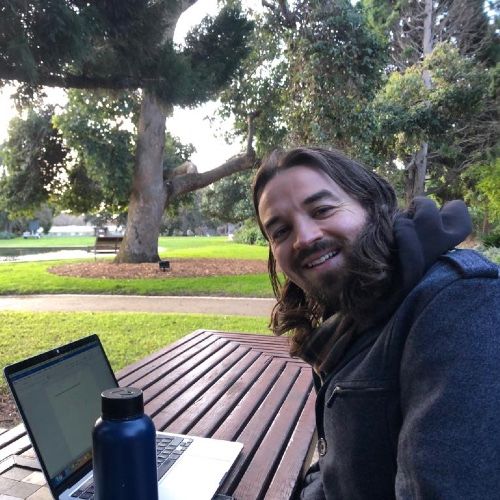
Originally from Argentina, Martín is an Associate Professor at OsloMet University in Norway. He’s also a Managing Editor of NORMA: International Journal for Masculinity Studies. His book, entitled ‘Taking Lives: Narratives of Latin American Femicide Perpetrators’, was published in 2025 by Palgrave Macmillan.
If you need support:
- UK National Domestic Abuse Helpline: 0808 2000 247
- USA National Domestic Violence Hotline: 1 800 799 7233
- Australian domestic and sexual violence counselling service - 1800RESPECT: 1800 737 732
- No More Global Directory of domestic and sexual violence helplines and services
Episode timeline:
- Intro
- What femicide means (02:00-04:37)
- Anti-femicide movements in Latin America (04:37-06:25)
- What led Martín to this research (06:25-08:12)
- His relationship with feminism (08:12-11:28)
- The role of narratives in making sense of men’s violence (11:28-14:34)
- Changing the public story about men who use violence (14:34-17:02)
- How perpetrators rationalise their actions (17:02-23:11)
- The role of emotions in violence (23:11-27:03)
- Break
- What femicide and male-male homicide have to do with masculinity (27:15-35:51)
- The importance of place (35:51-37:34)
- The tensions involved in speaking to men who’ve used violence (37:34-41:58)
- Researching the role of wider social networks (41:58-43:21)
- Possibilities for desistance and behaviour change (43:21-48:36)
- The limitations of typologies and pathologising perpetrators (48:36-51:57)
- Attacks on women’s rights in Argentina under Javier Milei (51:57-57:20)
- Conclusion (57:26-01:04:47)
More info:
- UNODC Femicide Framework
- Ni una menos movement
- Primary, secondary and tertiary prevention
- Prof Dabney Evans
- Prof Lois Presser
- Hannah Arendt
- Femicide in Ciudad Juárez
- Rita Segato
- Twelve-Step Program
- Javier Milei - Argentina
- Gabriel Boric - Chile
- Dr Gwen Adshead
- ‘The Devil You Know’ book
- Reith Lectures 2024 – ‘Four Questions about Violence’
- Volunteering Matters (formerly Community Service Volunteers)
- CSV Volunteering - The Borstals Programme
- A bestselling true crime author, and the crimes he’s accused of – Guardian podcast
Music: 'Now is time', courtesy of Chaps' Choir and Dom Stichbury. Please note that the transcript is a rough estimation and is likely to contain errors. Please do not reproduce without permission.